Introduction
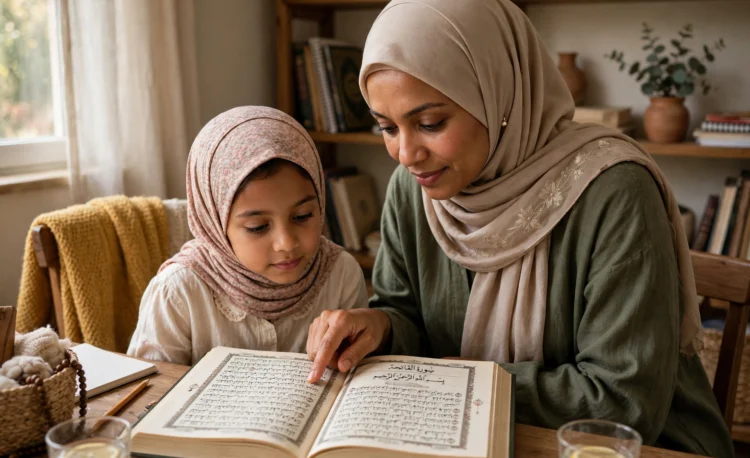
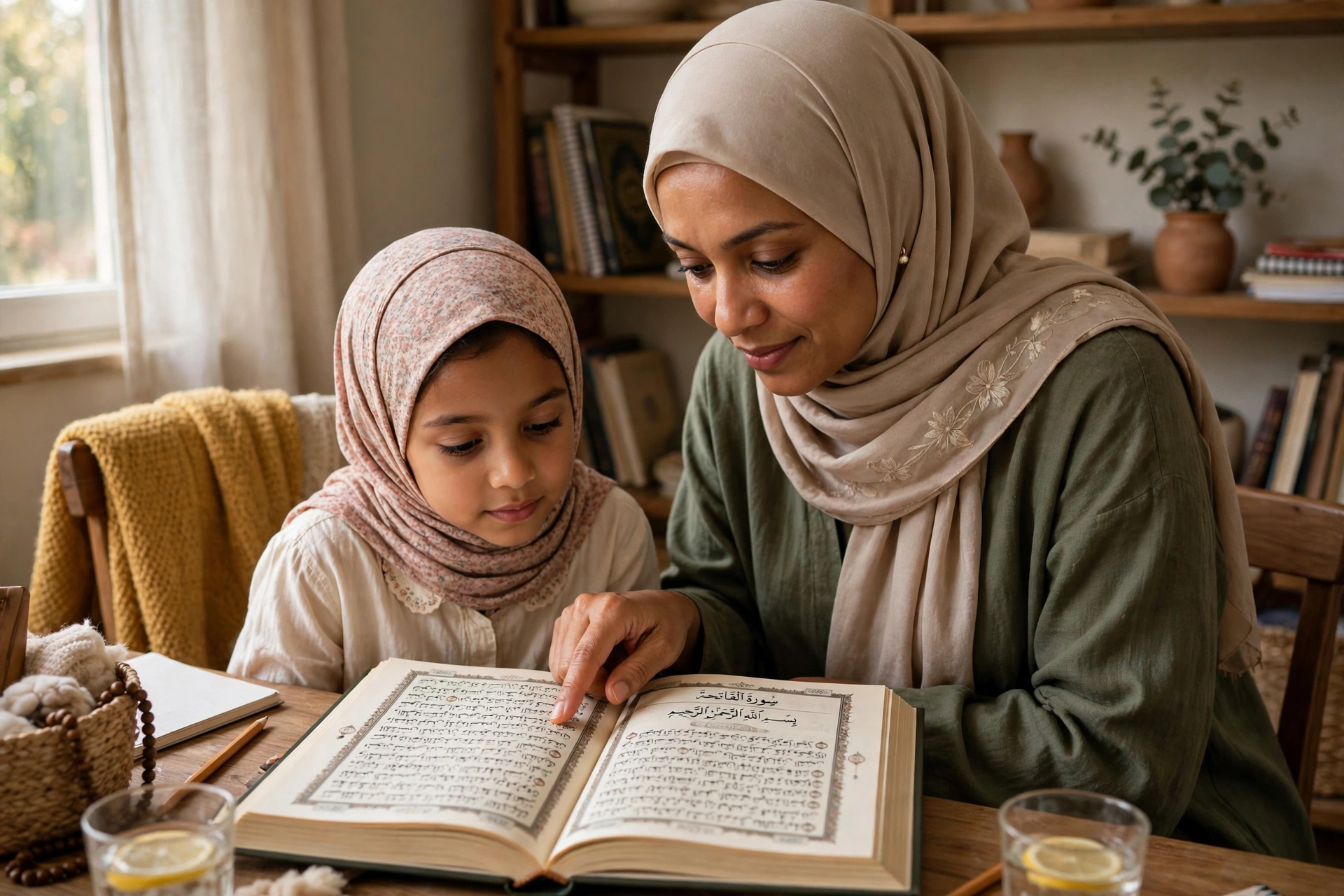
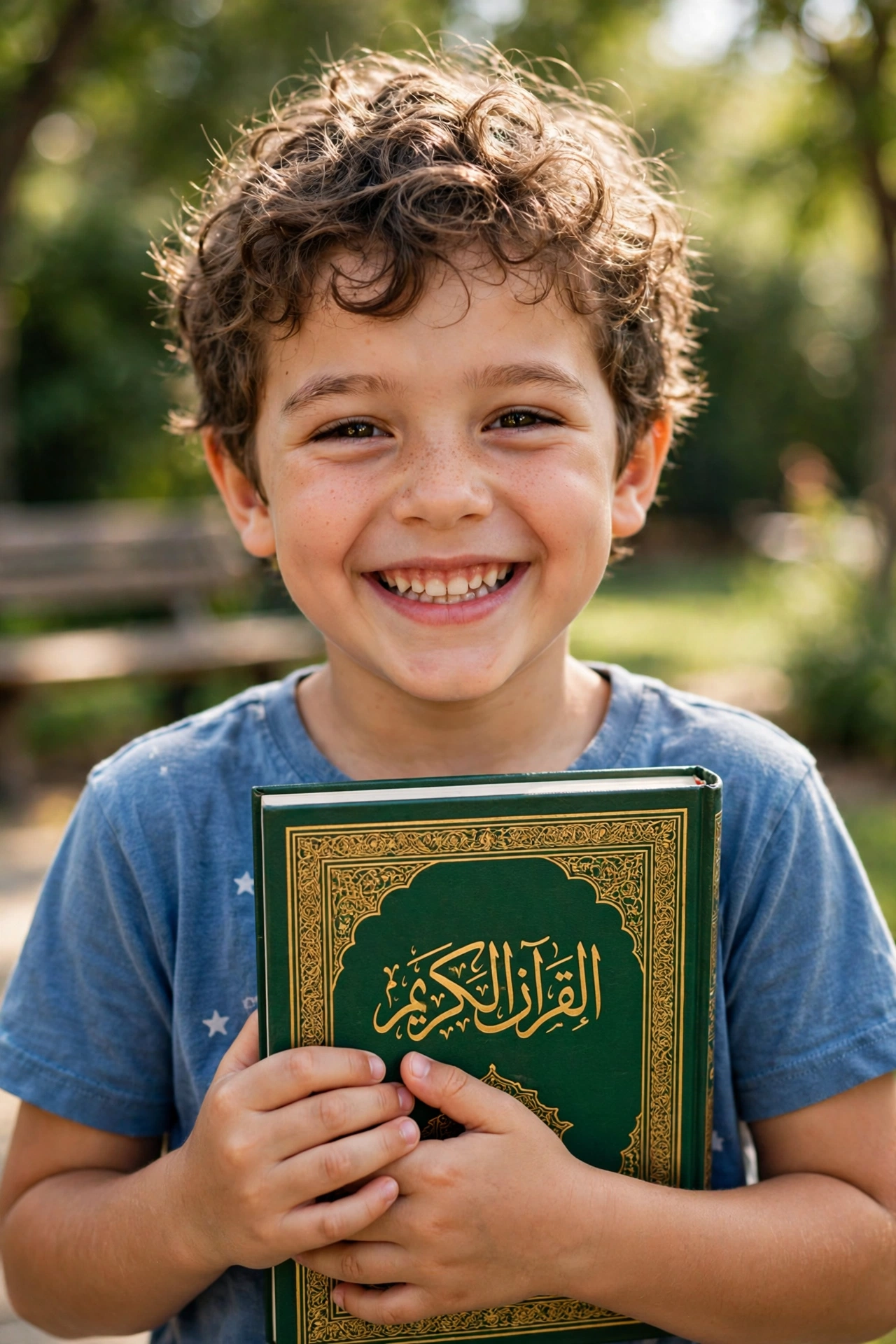
Every Muslim parent wishes to give their child the Quran. It is the greatest gift a parent can give: the words of Allah, carried in the heart from childhood, guiding the child for life. But many parents wonder where to start, how to keep a child interested, and how to fit Quran learning into a busy family life.
This guide gives parents a simple plan: when to start, how to build a daily routine, how to make learning fun, and how one to one online classes can support you and your child.
Start early, start gently
Children can begin learning the Quran very young. At three or four years old, a child can learn the Arabic alphabet through songs, games and colourful books. At five or six, most children can start reading simple words, and a patient tutor can guide them step by step.
The key is to start gently. Short sessions, ten to fifteen minutes, are enough for a young child. A child who enjoys learning will ask for more. A child who is forced will resist. Keep the first lessons light and happy, and praise every small success.
Build a daily routine
Children learn best with routine. Choose a fixed time every day for the Quran, for example after Fajr, after school, or before bed. A fixed time makes the Quran a normal part of the day, like eating and sleeping, and the child comes to expect it.
Keep the routine simple: a short revision of yesterday’s lesson, then a small new lesson, then a little practice. End with something the child enjoys, such as a story from the Quran or a favourite surah. A regular routine, even a short one, builds a strong habit that lasts for years.
Make learning fun
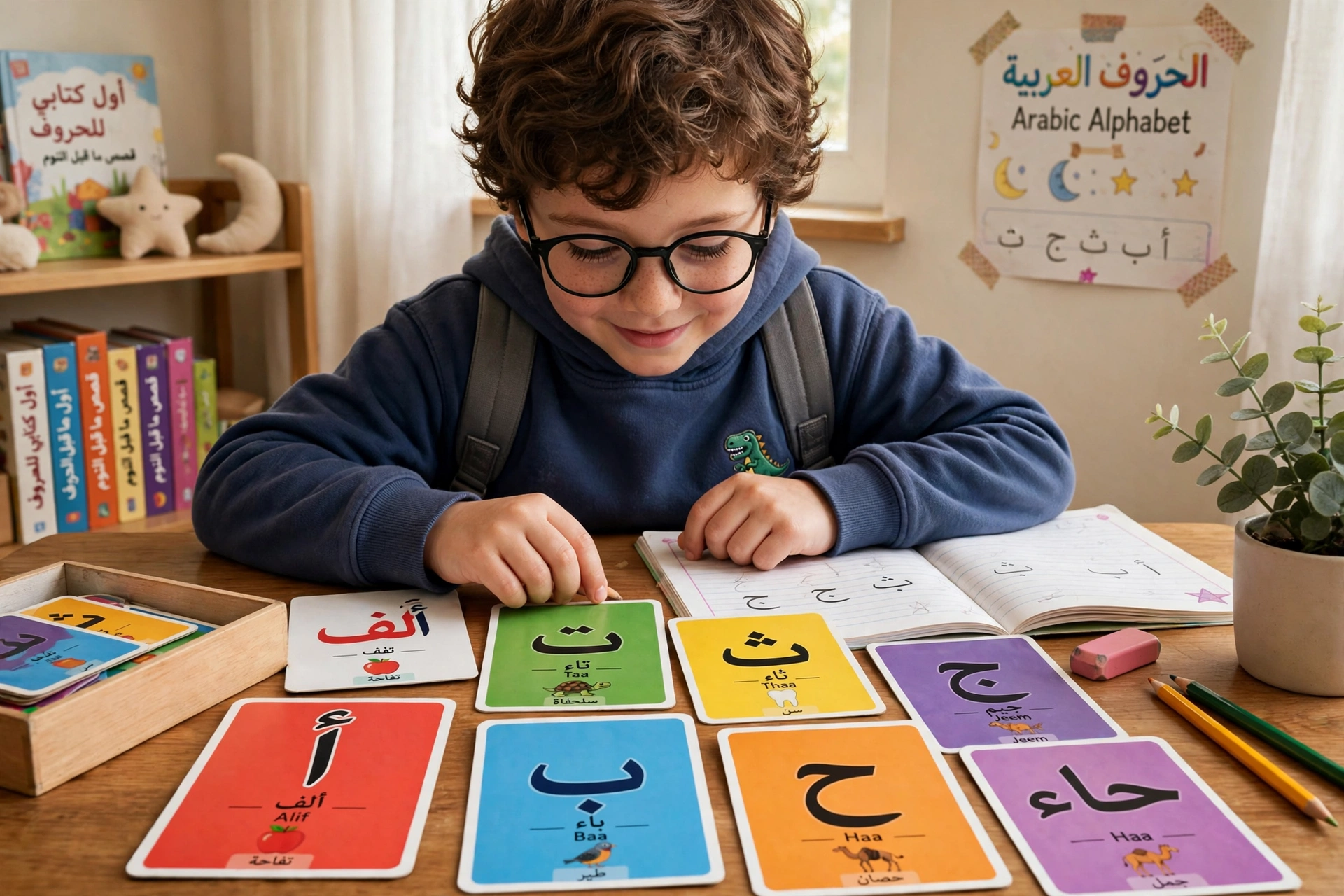
Children learn through play. Use colourful books, letter cards, and simple games to teach the alphabet. Sing the letters together. Let the child trace letters with a finger. Reward effort with praise, stickers, or a small treat, and celebrate milestones: finishing the alphabet, reading the first surah, memorising the first short chapter.
Let the child hear beautiful recitation. Play a good reciter in the car or at home, and let the child follow along. Children copy what they hear, and beautiful recitation inspires them to recite beautifully themselves.
Your role as a parent
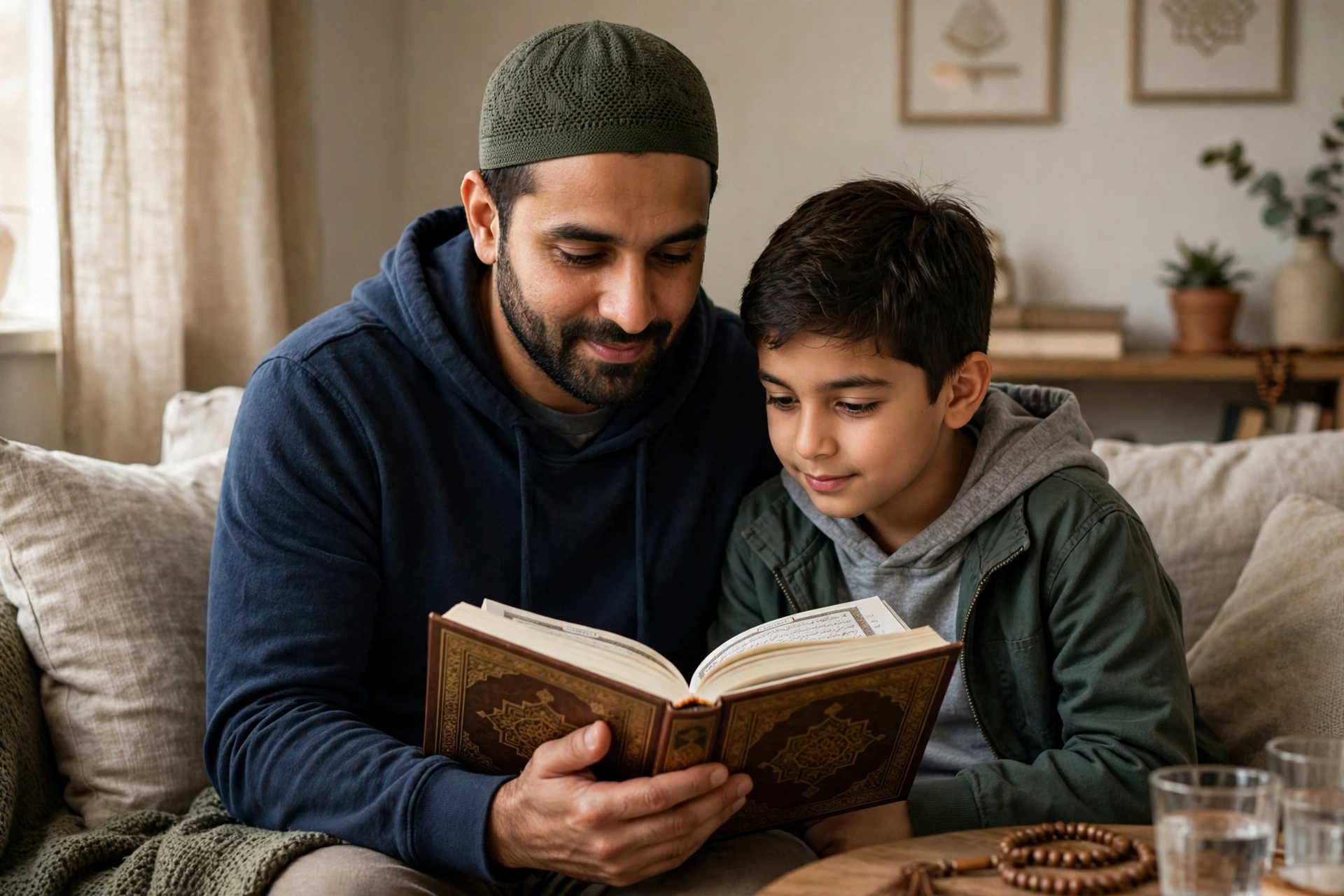
You do not need to be a teacher yourself. Your role is to encourage, to listen, and to keep the routine going. Sit with your child during practice, listen to their recitation, and praise their effort. If you can read the Quran yourself, read together: a child who sees a parent reading the Quran learns that the Quran matters.
Be patient when progress is slow. Every child learns at a different pace, and comparing your child with others only causes stress. Celebrate your child’s own progress, however small, and keep going. The goal is a child who loves the Quran, not a child who finishes quickly.
How online classes help your child
One to one online classes are ideal for children. The tutor gives your child full attention, moves at your child’s pace, and corrects mistakes gently. Classes are held at home, where your child feels safe, and you can watch the lesson and follow the progress.
A qualified tutor knows how to teach children: short activities, clear instructions, lots of praise, and a patient manner. The tutor will set a plan for your child, from the alphabet to reading, Tajweed, and, when ready, Hifz. Flexible timing means classes fit around school and family life, even on weekends.
What your child will learn
Your child will start with the Arabic alphabet and Quran Reading, learning to join letters and read words. Then comes Tajweed, the correct pronunciation of each letter, so your child recites beautifully from the start. Nazra follows: fluent reading from the Mushaf, with correct Makharij.
As your child grows, they can learn Namaz Training, how to pray correctly, and Basic Islamic Studies: daily duas, Islamic manners, and stories that teach good character. If your child wishes, they can begin Hifz, memorising the Quran step by step, with the tutor’s guidance and your support at home.

Donate Now
Common challenges and how to handle them
Some days your child will not want to study, and that is normal. Keep the session short on those days, and try again tomorrow. Never punish a child for struggling with the Quran, as this can make the child dislike it. Instead, find what is hard, and ask the tutor to go slower.
If your child is shy, a one to one class is the best setting: there is no audience, only a kind tutor. If your child is restless, ask the tutor for shorter, more active lessons, with games and movement between parts. A good tutor will adapt to your child.
A Hadith to remember
The Prophet Muhammad, peace be upon him, said: “Each of you is a shepherd, and each of you is responsible for his flock.” (Sahih al-Bukhari and Sahih Muslim)
Parents are shepherds of their children, and teaching them the Quran is one of the greatest responsibilities and one of the greatest rewards. When you teach your child the Quran, you give them guidance for this life and a treasure for the next, and you will share in the reward of every verse they recite.
Conclusion
Teaching your child the Quran at home is simple when you start early, keep a short daily routine, make learning fun, and let a qualified tutor guide the way. Be patient, praise often, and remember that you are planting a seed that will grow for your child’s whole life.
To enrol your child in one to one online Quran classes, contact Madina Quran on WhatsApp, IMO or Skype at +923006264166. Learn anywhere, anytime, and start your child’s Quran journey now.
Support Madrasa Anas Bin Malik
Madrasa Anas Bin Malik needs your support. Your donation helps the madrasa teach the Quran to children and adults. To donate, or to ask how your donation will be used, contact Madina Quran on WhatsApp, IMO or Skype at +923006264166. You can donate through PayPal at vehari566@gmail.com, or by scanning the QR code below to donate through the TRC20 wallet. Every donation is voluntary, and keeping your payment receipt is a good idea. To learn more about the madrasa and how donations are used, visit the Donate page on this site. Thank you for supporting Quran education.
Donate Now
Frequently asked questions
When should my child start learning the Quran?
Children can start with the alphabet at three or four years old, through songs and games. At five or six, most children can start reading simple words with a tutor.
How long should a child’s lesson be?
Ten to fifteen minutes is enough for a young child. As the child grows, lessons can become longer. Short, happy sessions are better than long, forced ones.
Do I need to know the Quran to teach my child?
No. A qualified tutor teaches your child, and your role is to encourage, listen, and keep the daily routine going. One to one online classes give your child full attention.
How do online Quran classes work for children?
Classes are held one to one online, at home, at a time that suits your family. You can watch the lesson. Contact Madina Quran on WhatsApp, IMO or Skype at +923006264166.
What will my child learn first?
Your child will start with the Arabic alphabet and Quran Reading, then Tajweed, Nazra, Namaz Training and Basic Islamic Studies, and Hifz when ready.