Introduction
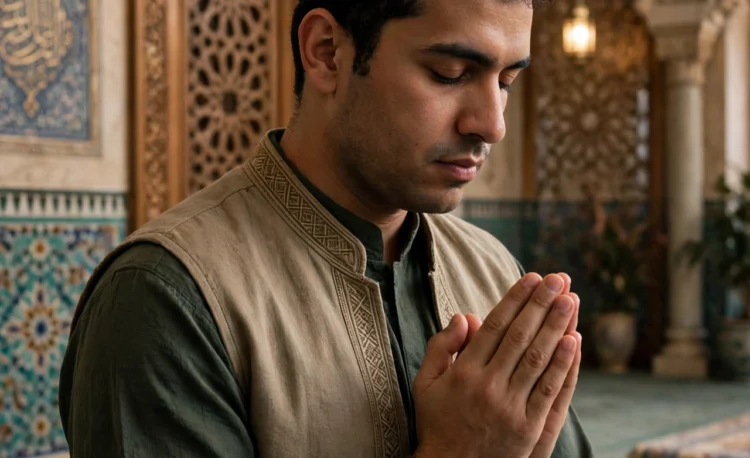
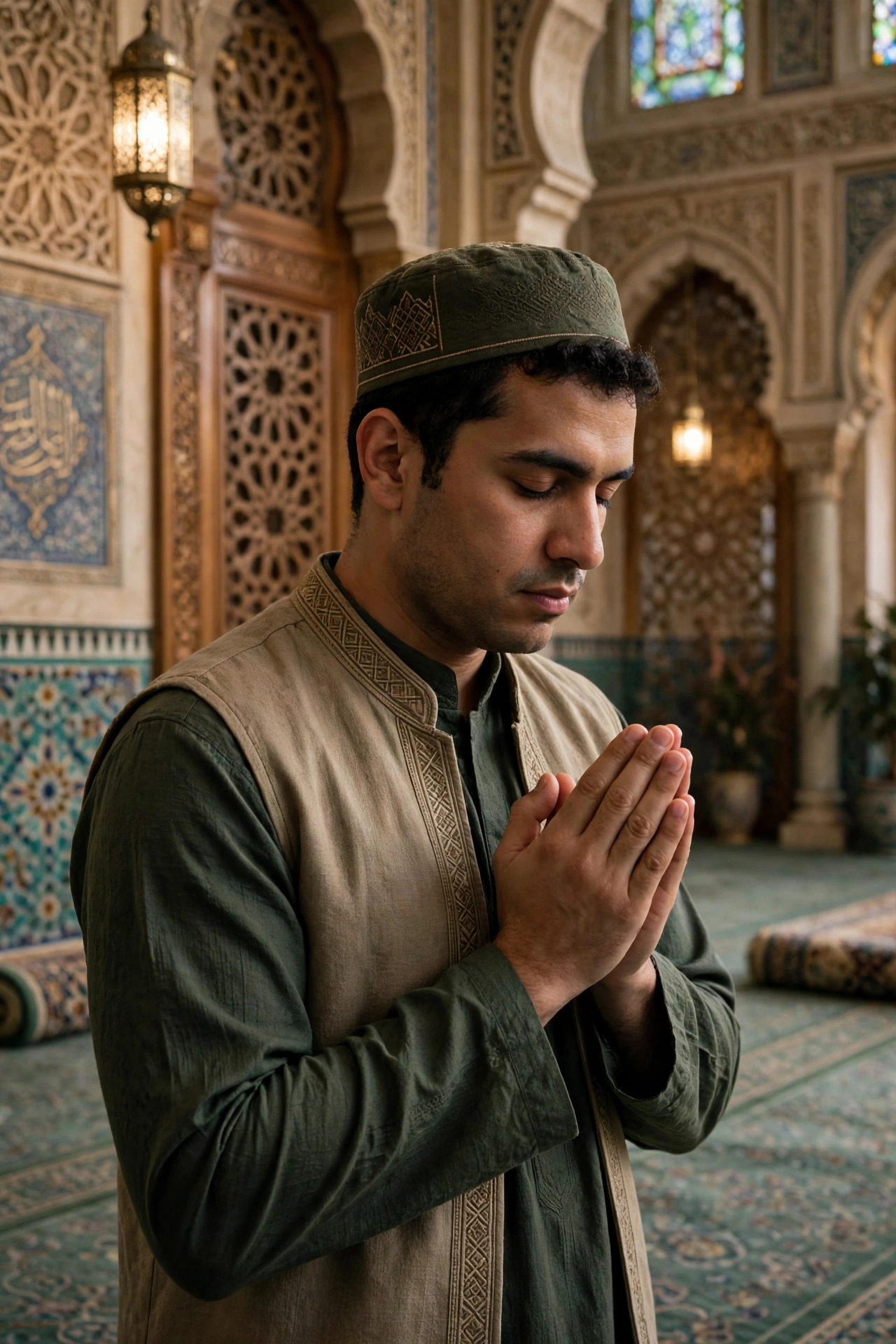
Salah, the prayer, is the second pillar of Islam, and it is the first act of worship that a Muslim will be asked about on the Day of Resurrection. For a new Muslim, or for a Muslim who was never taught properly, learning to pray can feel difficult. But it is simpler than it looks, and it becomes natural with practice.
This guide explains how to learn Namaz step by step: the wudu, the five daily prayers, what to say, and the common mistakes to avoid.
Start with wudu
Before prayer, a Muslim performs wudu, the ablution. Wudu is a washing of the hands, the mouth, the nose, the face, the arms up to the elbows, the head, the ears, and the feet up to the ankles, in a set order, with the intention of purifying oneself for prayer.
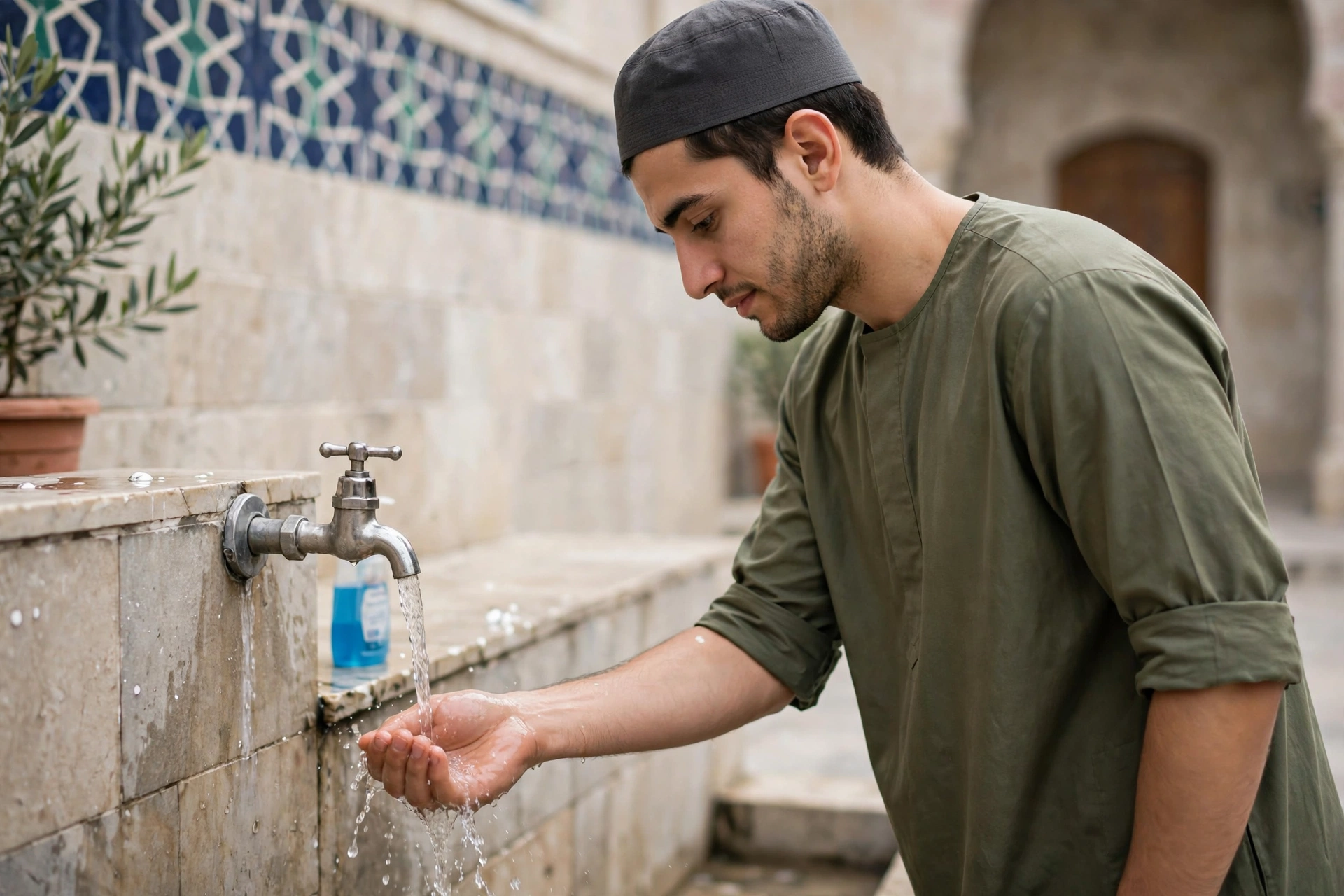
Learn wudu first, before you learn the prayer itself, because no prayer is valid without it. Practise wudu slowly, following the steps in order, until it becomes a habit. A tutor can show you each step, and correct any mistake, so that you learn it correctly from the start.
If water is not available, or if water would harm you, Tayammum, dry ablution with clean earth, can be performed instead. Your tutor can explain when Tayammum is allowed and how to perform it.
The five daily prayers
Muslims pray five times a day: Fajr, at dawn, before sunrise; Dhuhr, at midday, after the sun has passed its highest point; Asr, in the late afternoon; Maghrib, just after sunset; and Isha, at night.
Each prayer has a set number of Rakats, units of prayer. Fajr has two, Dhuhr has four, Asr has four, Maghrib has three, and Isha has four. Each prayer also has Sunnah prayers before or after it, which the Prophet, peace be upon him, used to pray, and which bring extra reward.
Start with one prayer, and learn it well, before you move on to the next. Most beginners start with Fajr, because it is the shortest, with only two Rakats. Once Fajr is comfortable, add the next prayer, and so on, until all five are part of your day.
What to say in prayer
The prayer is in Arabic, and it follows a set pattern. The main parts are: the opening Takbeer, Allahu Akbar, the recitation of Surah Al-Fatiha, the recitation of another short Surah, the bowing, called Ruku, the standing up, the prostration, called Sujood, the sitting, and the final greeting, the Tasleem.
For a beginner, the first thing to memorise is Surah Al-Fatiha, because it is recited in every Rakat of every prayer. Then memorise a few short Surahs, such as Al-Ikhlas, Al-Falaq, and An-Nas, to recite after Al-Fatiha. Then learn the short phrases said in Ruku, in Sujood, and in the sitting position.
Do not try to memorise everything at once. Learn one part, practise it in your prayer, and move on when you are ready. A tutor can listen to your recitation, correct your pronunciation, and make sure you are saying the words correctly.

Donate Now
The movements of prayer
The prayer is a series of movements, and each movement has a meaning. Standing is a sign of respect before Allah. Bowing is a sign of humility. Prostration, with the forehead on the ground, is the closest a servant comes to Allah, and it is a sign of complete submission.
Learn the movements slowly, one at a time, with a tutor who can show you the correct posture. Stand straight, with your feet apart and your hands folded. Bow with a straight back, and your hands on your knees. Prostrate with your forehead, nose, palms, knees, and toes on the ground. Sit calmly between the prostrations, and at the end of the prayer.
Pray slowly. Many beginners rush through the prayer, because they are nervous or because they want to finish quickly. A slow prayer, with calm movements and clear words, is better than a fast prayer. Take your time, breathe, and remember who you are standing before.
Common mistakes beginners make
The most common mistake is rushing. The Prophet, peace be upon him, taught that the prayer should be performed with calmness and stillness in every position. If you move from one position to the next without pausing, the prayer is not complete. Slow down, and let each position settle before you move on.
Another mistake is not learning the words correctly. Many beginners mumble the words, or say them from memory without knowing what they mean. Learn the words properly, and learn their meaning too, so that the prayer is not only a habit, but an act of worship with understanding.
A third mistake is praying alone when you could pray in congregation. Praying together, in the mosque or at home with family, brings extra reward, and it helps you learn, because you follow the Imam and hear the recitation. If you can, pray at least one prayer a day in congregation.
Teaching children Salah
Children should be taught to pray from the age of seven, and encouraged gently, not forced. Start with the wudu, then with the movements, then with the words, one step at a time. Let the child pray beside you, and copy what you do. Praise the child when it prays, and do not scold it for mistakes.

Make prayer a family habit. Pray together, at home, at the same time every day. A child that grows up seeing its parents pray will pray naturally, without being told. A child that is forced to pray, without understanding or love, may stop praying when it grows up.
At Madina Quran, our Namaz Training course teaches children and adults step by step, one to one, online, with a qualified and experienced tutor. Students learn wudu, the five prayers, the words, and the movements, at their own pace, until they can pray confidently on their own.
To enrol or to ask any question, contact Madina Quran on WhatsApp, IMO or Skype at +923006264166. Learn anywhere, anytime, and start your Quran journey now.
A Hadith to remember
The Prophet Muhammad, peace be upon him, said: “The first thing for which a person will be brought to account on the Day of Resurrection will be his prayer.” (Jami` at-Tirmidhi)
This hadith reminds us why learning Salah matters so much. Prayer is the first thing we will be asked about, and it is the foundation of our faith. If our prayer is sound, the rest of our deeds will be sound. Learn it well, pray it regularly, and teach it to your children.
Support Madrasa Anas Bin Malik
Madrasa Anas Bin Malik needs your support. Your donation helps the madrasa teach the Quran to children and adults. To donate, or to ask how your donation will be used, contact Madina Quran on WhatsApp, IMO or Skype at +923006264166.
You can donate through PayPal at vehari566@gmail.com, or by scanning the QR code below to donate through the TRC20 wallet. Every donation is voluntary, and keeping your payment receipt is a good idea. To learn more about the madrasa and how donations are used, visit the Donate page on this site. Thank you for supporting Quran education.
Donate Now
Conclusion
Learning Namaz is a journey of small steps: wudu, then one prayer, then the next, then the words, then the movements, until the whole prayer becomes natural. Be patient with yourself, practise every day, and learn with a qualified tutor. Prayer is the foundation of the faith, and the first thing we will be asked about. Learn it well, and it will carry you through this life and the next.
Frequently asked questions
How do I start learning Namaz?
Start with wudu, then learn Fajr, the shortest prayer, with two Rakats. Learn Surah Al-Fatiha first, then a few short Surahs, then the words and movements, one step at a time.
How many times a day do Muslims pray?
Five times a day: Fajr at dawn, Dhuhr at midday, Asr in the late afternoon, Maghrib just after sunset, and Isha at night.
What is wudu?
Wudu is the ablution performed before prayer: washing the hands, mouth, nose, face, arms up to the elbows, head, ears, and feet up to the ankles, in a set order.
Can children learn Namaz online?
Yes. At Madina Quran, our Namaz Training course teaches children and adults step by step, one to one, online, with a qualified and experienced tutor.
What is the most common mistake beginners make in prayer?
Rushing. The prayer should be performed with calmness and stillness in every position. Slow down, and let each position settle before you move on.