Introduction
The Quran was revealed to be recited beautifully and correctly, and Tajweed is the science that teaches us how. Tajweed means giving every letter its right, its proper sound, its proper place, and its proper length. For a beginner, Tajweed can seem difficult, but with a good teacher and a little daily practice, anyone can learn it, step by step.
This guide explains what Tajweed is, why it matters, the first rules every beginner should learn, and how one to one online classes make learning Tajweed simple.
What is Tajweed
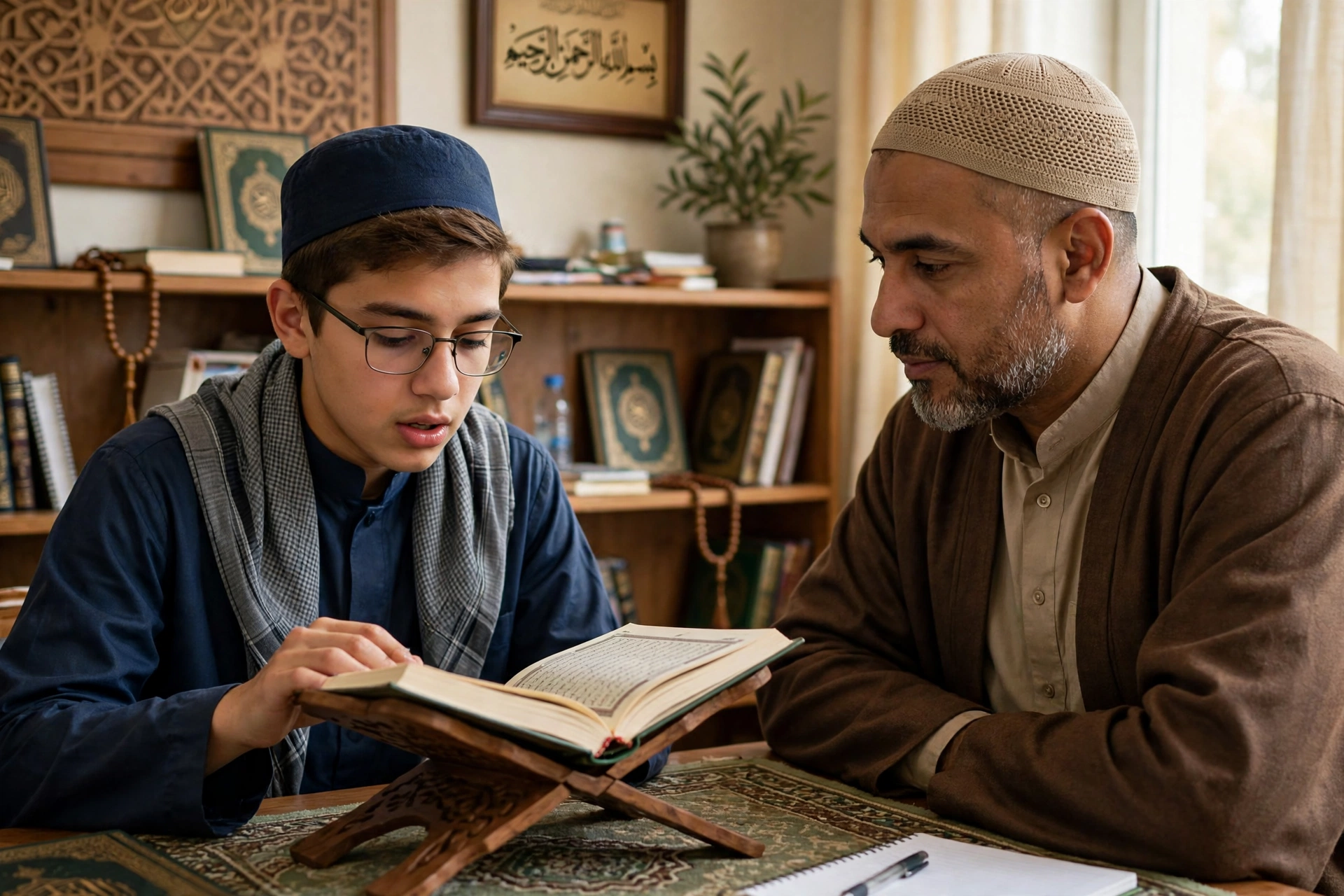
Tajweed is the set of rules for reciting the Quran correctly. It covers how each Arabic letter is pronounced, where each sound comes from in the mouth and throat, how long each vowel is held, and how letters change when they meet each other. The word Tajweed itself comes from the Arabic root meaning to make better, to beautify, and that is exactly what it does: it beautifies your recitation.
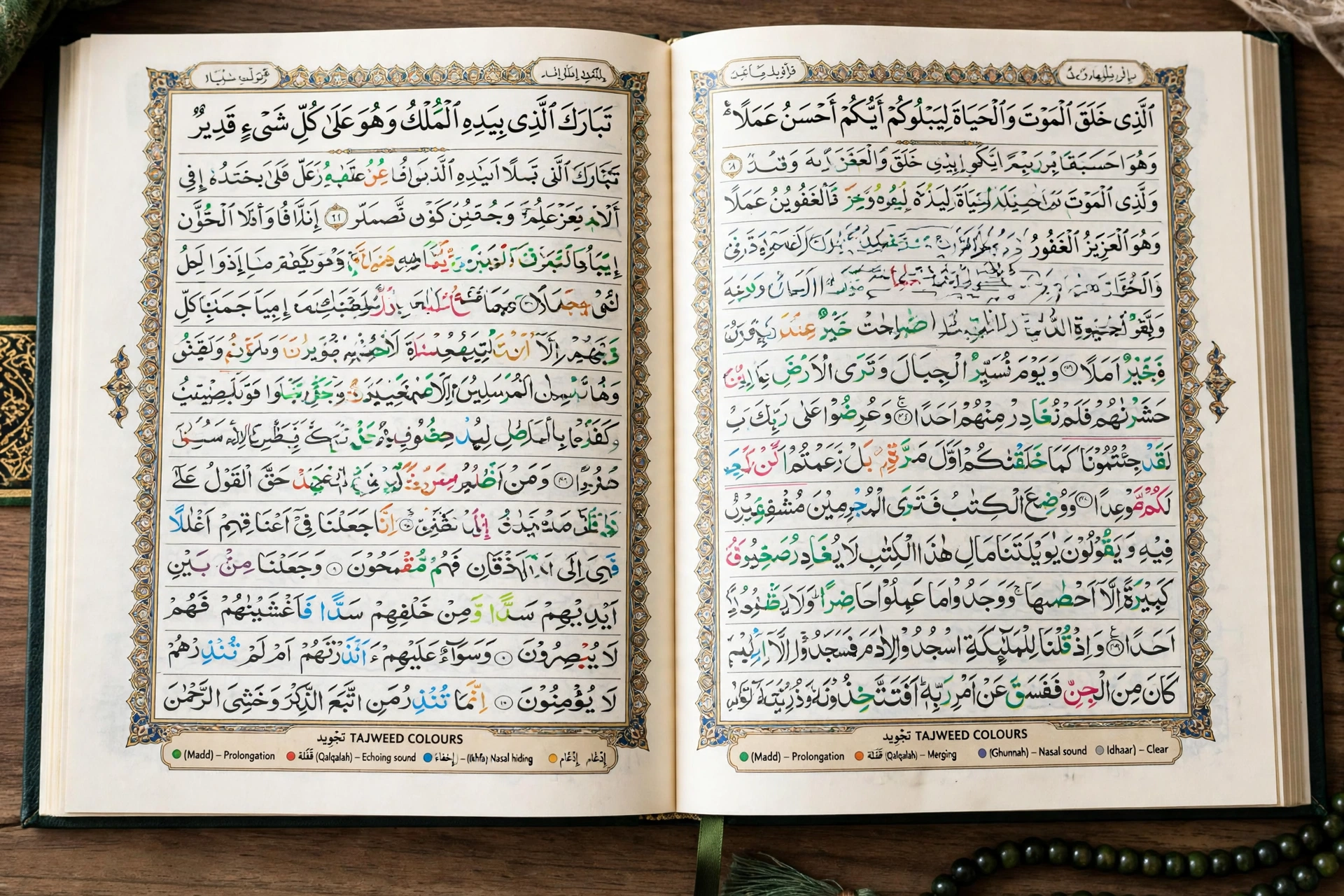
Tajweed is not only about beauty. Correct pronunciation protects the meaning of the words. In Arabic, changing one letter can change the meaning of a whole word, so reciting correctly is also a matter of respect for the Quran.
Makharij: where each letter comes from
The first step in Tajweed is Makharij, the places from which letters are pronounced. Arabic letters come from five main places: the throat, the tongue, the lips, the nose and the empty space of the mouth. For example, some letters come from the deepest part of the throat, some from the tip of the tongue, and some from the lips.
A tutor will teach you each letter one by one, showing you exactly where it comes from and how it sounds. You will practise each letter until it is clear and correct, and only then move on. This slow, careful start is the foundation of all good recitation.
The first Tajweed rules to learn
After the letters, beginners learn the basic rules that govern how letters behave together. One of the first is Noon Sakinah and Tanween: the rules for what happens when the letter noon, or a tanween, meets the letter that follows it. Depending on the next letter, the sound is pronounced clearly, merged, changed, or hidden. These rules are the reason the Quran sounds the way it does when recited well.
Another basic rule is Meem Sakinah, which governs the letter meem in the same way. Then come the rules of Madd, the lengthening of vowels: some vowels are held for two counts, some for four or six, and knowing which is which is part of good recitation. Beginners do not need to learn all of this at once. A good tutor introduces one rule at a time, with plenty of practice, until it becomes natural.
Common mistakes beginners make
The most common mistake is rushing. Beginners often try to read fast, before the letters are correct. Slow, correct reading is always better than fast, incorrect reading. Speed comes later, with practice.
Another common mistake is ignoring the small marks, such as the signs for lengthening and stopping, which guide the recitation. These marks are there to help you, and a tutor will teach you to follow them.
A third mistake is practising alone without correction. It is easy to repeat a mistake until it becomes a habit. That is why a tutor matters: one to one correction catches mistakes early, before they become fixed.
How online classes help you learn Tajweed
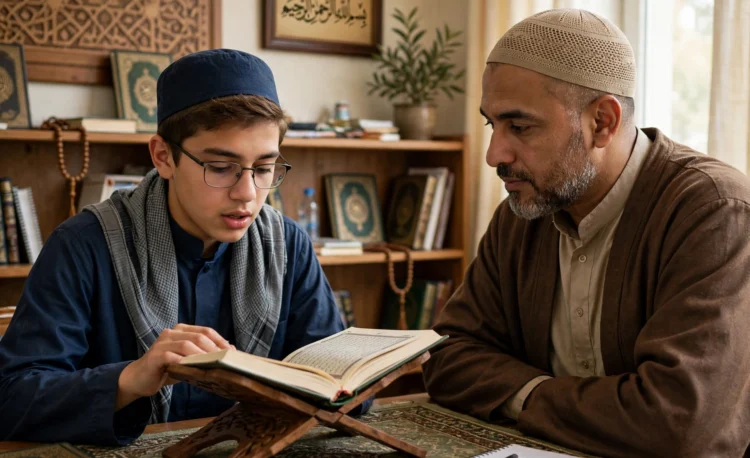
One to one online classes are ideal for Tajweed, because the tutor listens to every word you recite and corrects you at once. In a group, a mistake can go unnoticed. In a one to one class, it is caught and fixed in the moment, and you practise the correct sound until it is natural.
Online classes also allow the tutor to share the screen, point to the exact letter, and show you the rule as you read. You can record the lesson and listen again during the week. Flexible timing means you can have a short lesson every day, which is the best way to learn Tajweed: a little, often, with correction.

Donate Now
Practising Tajweed at home
Daily practice is what turns lessons into skill. Set aside ten to fifteen minutes a day for recitation. Read slowly, listen to yourself, and follow the rules you learned. Listen to a good reciter and follow along, noticing how the rules sound in real recitation. Revise old lessons before starting new ones, as Tajweed is built on what came before.
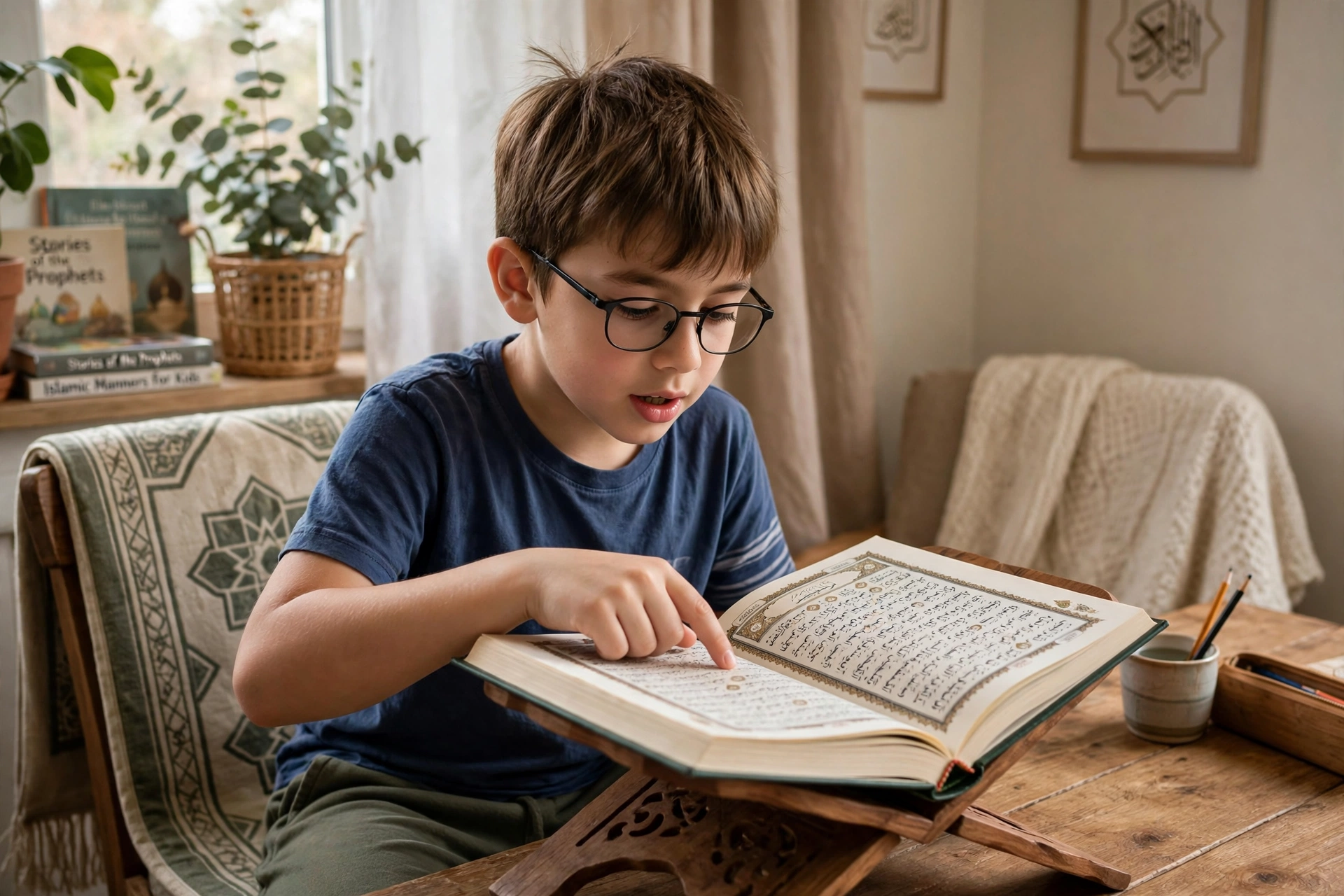
Ask your family to listen sometimes, and ask your tutor whenever you are unsure. Keep a notebook of the rules you have learned and the letters you find difficult, and practise those a little more. Progress in Tajweed is steady and visible: week by week, your recitation becomes clearer and more beautiful.
A Hadith to remember
The Prophet Muhammad, peace be upon him, said: “The one who is proficient in the recitation of the Quran will be with the honourable and obedient scribes (angels), and the one who recites the Quran with difficulty will have a double reward.” (Sahih al-Bukhari and Sahih Muslim)
This hadith gives hope to every learner. Those who recite well are promised a high rank, and those who struggle are promised a double reward, one for the recitation and one for the effort. So there is no reason to give up: every effort in learning the Quran is rewarded.
Conclusion
Tajweed is the key to beautiful and correct recitation of the Quran. Start with the letters and their Makharij, learn one rule at a time, practise a little every day, and let a qualified tutor correct you. With patience and one to one guidance, your recitation will become clearer, more beautiful, and more rewarding.
To begin learning Tajweed with a qualified tutor, contact Madina Quran on WhatsApp, IMO or Skype at +923006264166. Learn anywhere, anytime, and start your Quran journey now.

Support Madrasa Anas Bin Malik
Madrasa Anas Bin Malik needs your support. Your donation helps the madrasa teach the Quran to children and adults. To donate, or to ask how your donation will be used, contact Madina Quran on WhatsApp, IMO or Skype at +923006264166. You can donate through PayPal at vehari566@gmail.com, or by scanning the QR code below to donate through the TRC20 wallet. Every donation is voluntary, and keeping your payment receipt is a good idea. To learn more about the madrasa and how donations are used, visit the Donate page on this site. Thank you for supporting Quran education.
Donate Now
Frequently asked questions
What is Tajweed?
Tajweed is the set of rules for reciting the Quran correctly: the pronunciation of each letter, where it comes from, how long vowels are held, and how letters behave together.
Do I need to know Arabic to learn Tajweed?
No. Tajweed starts with the Arabic letters themselves. Your tutor will teach you each letter, its sound and its place, even if you have never studied Arabic before.
How long does it take to learn Tajweed?
It depends on how often you practise. With regular lessons and ten to fifteen minutes of daily practice, most students see clear improvement within a few months.
Can I learn Tajweed online?
Yes. One to one online classes are ideal for Tajweed, because the tutor listens to every word and corrects you at once. Contact Madina Quran on WhatsApp, IMO or Skype at +923006264166.
What is Makharij?
Makharij are the places from which Arabic letters are pronounced: the throat, the tongue, the lips, the nose and the mouth. Learning them is the first step in Tajweed.